Mâle alpha
Mon Loup AlphaMâle alpha is both a social ideal and an erotic lens through which Julien understands Nemrod. At first, Julien reads the signs of a fighter in Nemrod’s imposing physique and scars; later, Nemrod’s defense of him and ambition to lead a united group of wolves and jaguar-shifters make that impression part of the story’s supernatural politics. The concept joins masculine appearance, combat, protection, sexual possession, and authority, while Nemrod’s attempts to keep Julien safe reveal a tension between dominance and care.
Identity and First Impressions
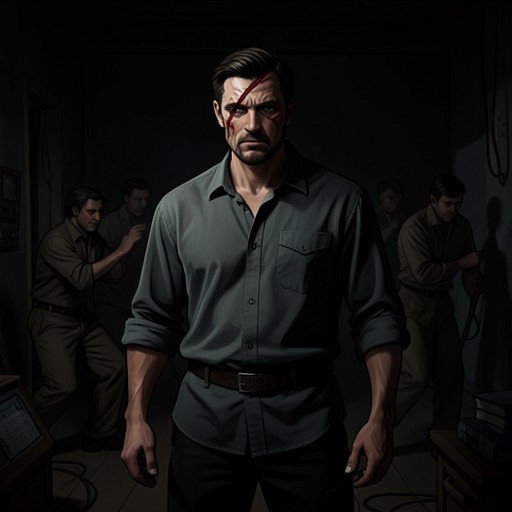
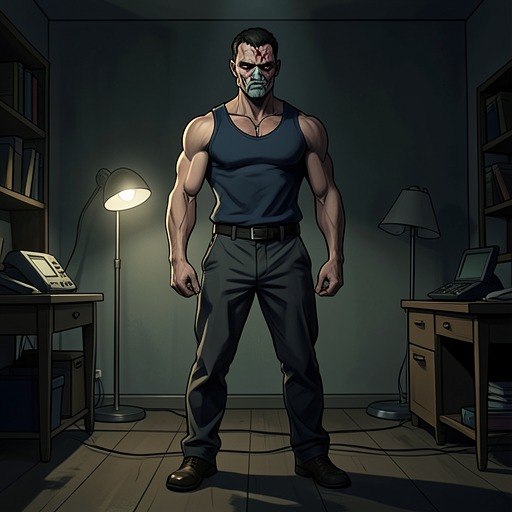
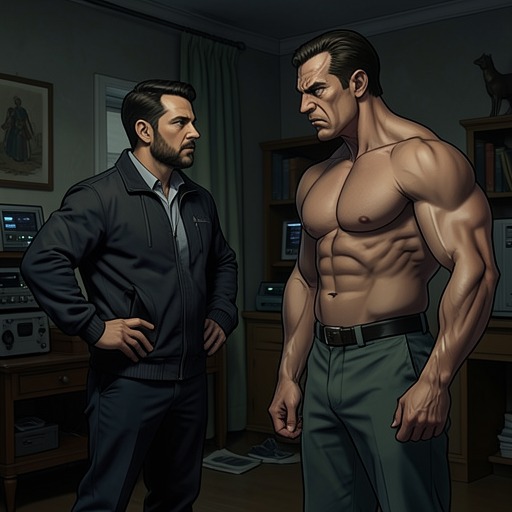
Julien’s idea of Mâle alpha begins as an interpretation, not a fact he knows about Nemrod. Under the moon, Nemrod’s broad, muscular torso and powerful shoulders suggest a soldier or warrior. His unshaven face and the glimpse of hair on his legs reinforce Julien’s attraction to a rough, conventionally masculine appearance. The body is not incidental decoration: Julien treats it as the first evidence from which he constructs an identity for the stranger.
The injuries then seem to confirm that reading. Nemrod’s lacerations look as if they were made by a wild animal, and Julien finds the possibility that he has just been in a fight exciting. In Julien’s generalization, masculine men fight to defend themselves, their families, their pride, or their territory. That belief turns visible wounds into a moral and social signal: they appear to testify not only to Nemrod’s physical toughness but also to the kinds of causes for which a man might fight.
A triangular scar on Nemrod’s left cheek sharpens the impression. Julien takes it as evidence of repeated combat and suddenly sees Nemrod as a fierce Mâle alpha, perhaps a leader. The inference is emotionally persuasive but initially uncertain: Julien is projecting an imagined rank onto a stranger before he learns about the conflict Nemrod is actually involved in. The subsequent story gives that early image a political basis without erasing its origin in Julien’s desire and assumptions.
Masculinity as Physical Action
For Julien, Mâle alpha is demonstrated most powerfully through action. When a jaguar appears at the window and Nemrod transforms into a wolf, the admired human body gives way to an animal one. Nemrod’s limbs become wolf legs and paws; his body stretches onto all fours, and his mouth and eyes take on the features of a wild wolf. The transformation makes the story’s ideal of masculine force literal and bodily: the figure Julien had imagined as a warrior becomes an animal combatant before him.
The confrontation is organized around challenge and territory. Nemrod howls, the jaguar answers with a roar, and the two hold their ground rather than yield. When the jaguar pins Nemrod down with its paws against his throat, Julien searches for something with which to strike the attacker. Nemrod escapes the hold and sends the jaguar over the edge of the building. The contest therefore gives Julien’s earlier association between fighting and masculine identity a dramatic form, but it also makes the fight more than spectacle: Nemrod is defending Julien from a threat at his window.
Julien’s response is explicitly divided. He feels both excitement at the battle and worry for Nemrod, while the sight of his companion fighting to protect him intensifies his attraction. He experiences the defense as sensual and primal, linking Nemrod’s physical struggle to the protection of Julien’s honor and safety. The scene shows how the story makes force desirable within Julien’s point of view, while retaining the danger that gives his excitement its opposing note of fear.
Leadership and Conflict
Nemrod’s authority is not simply a matter of appearance or strength. After the fight, he explains that Tyler is pursuing him and that the jaguar thrown from the building was one of Tyler’s henchmen. Nemrod is struggling to become leader of a united pack of wolves and jaguar-shifters; the wolf-and-jaguar tattoo on his forearm provides a visible sign of that political ambition. Mâle alpha thus extends from individual masculinity into contested leadership over a mixed group.
The ambition makes the concept unstable as well as attractive. Nemrod is not already presented as secure in power: he is fighting to attain the leadership he seeks, and Tyler’s pursuit exposes the danger surrounding that contest. His body and ability to fight may make him appear leader-like to Julien, but authority remains an outcome under dispute. The story connects the personal image of a formidable man to a larger struggle over who can unite the group and hold its leadership.
Nemrod also names the cost of drawing Julien into this conflict. He apologizes for involving him and acknowledges that the political struggle puts him in danger. Julien answers that being Nemrod’s companion makes the danger his concern too. His decision does not resolve the leadership contest, but it changes how he understands participation in it: Nemrod’s battles have become bound up with the relationship Julien has chosen.
Possession, Protection, and the Companion Bond
The story also gives Mâle alpha an intimate, territorial dimension. After Nemrod has been injured, he notices the bandages on his flanks, touches Julien’s cheek, identifies him as his companion, and kisses him. Earlier, he has sniffed Julien as a way of possessing him; Julien recognizes the gesture in those terms and responds by smelling Nemrod in turn. Their exchange turns animal recognition into a mutual, embodied sign of attachment, although the language of claiming and possession gives that bond an unmistakably unequal edge.
The sexual marking intensifies the same association. Julien interprets Nemrod’s use of his own semen to mark him as a masculine act of claiming territory, and he wants to belong to Nemrod. For Julien, possession is not separate from affection: it makes the desired bond tangible. Yet the relationship cannot be reduced to dominance alone. Nemrod’s tenderness in touching Julien’s cheek and his concern about exposing him to danger sit alongside the physical claim, placing care and possession in the same relationship rather than making them alternatives.
Limits and Consequences
Nemrod’s conduct complicates any simple equation between leadership and domination. Although he claims Julien and fights to protect him, he later leaves a note explaining that staying would place Julien at risk. He says he is in a dangerous political conflict over becoming clan leader and that he will return if he succeeds. The decision is still Nemrod’s to make, and it separates the companions; protection here means withholding his presence rather than fighting beside Julien.
Julien does not interpret that separation as the end of his commitment. While working at a hospital in Montréal, he remains distracted by Nemrod’s kiss, the sexual marking, and the knowledge that his companion is a shapeshifter caught in a struggle for pack leadership. Later, seeing lovers walk hand in hand leads him to decide that loving someone means supporting that person unconditionally. He resolves to go to Nemrod and help him win the clan war. The Mâle alpha ideal has therefore drawn Julien from admiring Nemrod’s masculine force to accepting a place beside him in its political consequences.
The story’s stated interest in departing from conventional gay fantasy romance conventions is reflected in this unusually direct joining of desire, animal transformation, and leadership conflict. Mâle alpha is not merely a label for a strong male body: it is a framework through which Julien eroticizes fighting and protection, Nemrod pursues authority, and the lovers negotiate whether belonging means being claimed, being sheltered, or sharing danger. By the close of this portion of the story, Julien has chosen the last of these, while Nemrod’s struggle for leadership remains unresolved.